| Development Trends and Innovative Applications of Stainless Steel Processing Technology |
| Release Date: 2026-04-18 Views: 22 times |
|
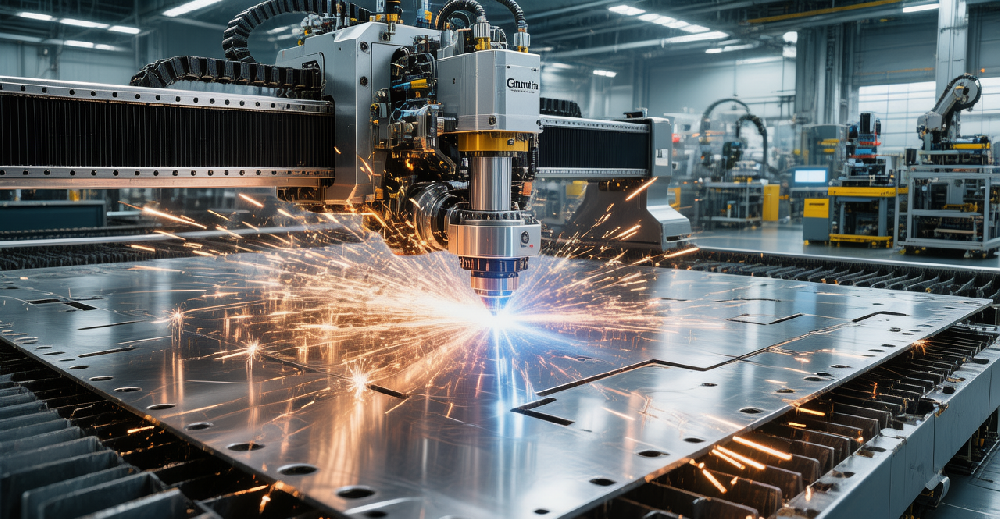
With the transformation and upgrading of the manufacturing industry, stainless steel processing technology is continuously innovating and advancing. The shift from traditional processing to intelligent manufacturing is redefining the production methods of the industry. 1. Widespread Adoption of Laser Cutting Technology Fiber laser cutting technology has become the mainstream method for stainless steel processing. Compared with traditional plasma and flame cutting, laser cutting offers significant advantages such as narrow kerf, small heat-affected zone, and high precision. In recent years, the popularization of 10,000-watt-class laser cutting equipment has greatly improved thick plate cutting efficiency, enabling high-quality cutting of stainless steel thick plates over 30mm. 2. CNC Bending and Forming Technology CNC press brakes combined with robotic loading and unloading systems have achieved automated production of stainless steel sheet processing. Multi-axis linkage bending technology can complete complex shapes in a single forming operation, greatly improving production efficiency and product accuracy. The application of servo drive technology further reduces energy consumption and noise. 3. Advances in Welding Processes Advanced welding technologies such as automated argon arc welding, laser welding, and plasma welding are increasingly common in stainless steel processing. Automated welding robots ensure consistency and aesthetics of weld seams, particularly suitable for high-volume production and complex weld requirements. The application of weld seam tracking and parameter adaptive technology has significantly reduced operational difficulty. 4. Intelligence and Digitization Trends The Industrial Internet and digital twin technology are driving the transition of stainless steel processing toward intelligent manufacturing. Through real-time collection and analysis of production data, companies can optimize process flows, predict equipment failures, and improve product quality. In the future, flexible manufacturing and personalized customization will become important development directions for the stainless steel processing industry. |