| Common Welding Defects in Stainless Steel and Prevention Measures |
| Release Date: 2026-05-28 Views: 38 times |
|
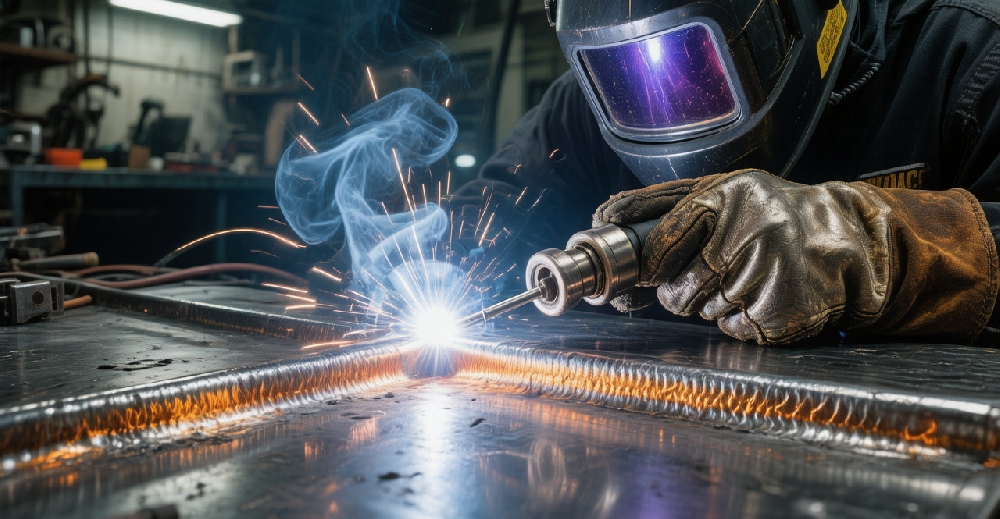
Welding is one of the most critical processes in stainless steel fabrication. Understanding common welding defects and their prevention measures is of great significance for ensuring welding quality and extending product service life. 1. Welding Hot Cracking Austenitic stainless steel is relatively prone to hot cracking during welding, which is closely related to its physical properties. Austenitic stainless steel has low thermal conductivity and a high coefficient of thermal expansion, generating significant tensile stress during welding. Prevention measures include: selecting welding consumables with an appropriate amount of ferrite (ferrite content controlled at 3%-10%), controlling welding heat input and interpass temperature, and avoiding restraint stress from forced assembly. 2. Intergranular Corrosion Intergranular corrosion in the weld heat-affected zone is an issue requiring special attention in stainless steel welding. In the sensitization temperature range of 450-850℃, chromium carbides precipitate along grain boundaries, leading to chromium depletion at grain boundaries. Main prevention measures include: selecting low-carbon grades (such as 304L, 316L) or materials containing stabilizing elements such as titanium or niobium; adopting low heat input rapid welding processes; performing solution treatment after welding. 3. Welding Deformation Control Stainless steel has a relatively high coefficient of thermal expansion, making welding deformation more pronounced than that of carbon steel. Control measures include: adopting reasonable welding sequences and back-step welding techniques; using rigid fixturing or reverse deformation techniques; employing symmetrical welding whenever possible; appropriately increasing the number and density of tack welds. 4. Weld Surface Quality Control For exposed decorative welds, surface color and finish are important quality indicators. Oxidation color on weld surfaces not only affects aesthetics but also reduces corrosion resistance. Post-weld pickling and passivation treatment should be performed to remove the oxide layer and restore the surface passivation film. For products with higher requirements, mechanical polishing can achieve a uniform surface effect. |